

























The Netherlands throws away an average of 34 kilos of edible food per person each year. That’s not just a waste of money — it’s also a huge waste of energy, water, and raw materials that were needed to produce that food. The good news: a large part of that waste can be prevented with the right storage.
1. Know the enemies of fresh food
Food spoils due to four factors: oxygen, moisture, heat, and light. Your storage method is really just about limiting these four factors.
- Oxygen — oxidizes fat, discolors fruit, lets bacteria grow
- Moisture — too much makes everything soft and moldy; too little dries it out
- Heat — speeds up bacterial growth exponentially
- Light — breaks down vitamins and speeds up ripening
2. Glass seals better than plastic
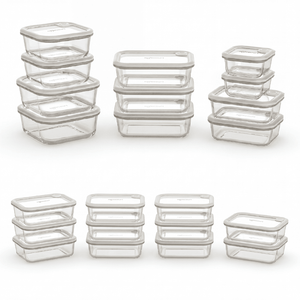
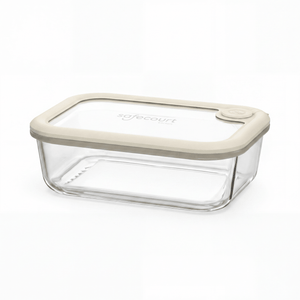
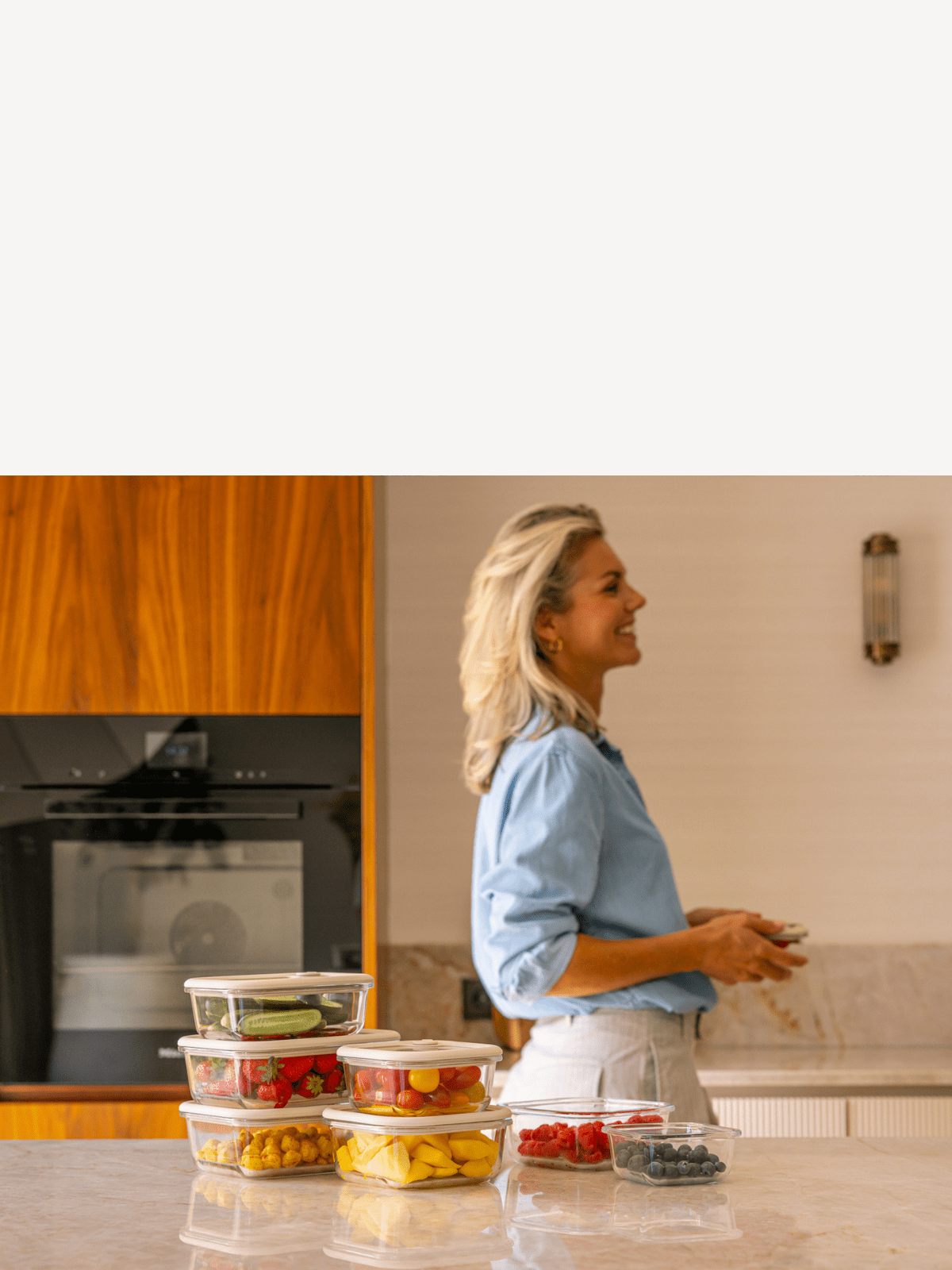
A glass container with a silicone seal closes more airtight than most plastic containers. Less oxygen = stays fresh longer. Plus, glass doesn’t absorb smells or colors — so yesterday’s soup won’t make your whole leftovers fridge smell.
3. Store herbs like flowers
Fresh parsley, cilantro, and basil? Put them in a glass of water, like a vase of flowers. Cover loosely with a plastic bag. In the fridge (not basil — it doesn’t like the cold) they’ll last 10–14 days instead of 3–4.
4. Whole fruit vs. cut fruit
A whole apple keeps for weeks. Sliced apple 1–2 days. Only cut fruit when you need it. If you do prep ahead: drizzle with lemon juice (the acid slows oxidation) and store in a closed glass container.
5. Not everything belongs in the fridge
Storing things in the fridge that don’t belong there actually speeds up spoilage:
- Tomatoes — they turn mealy and tasteless in the fridge. Room temperature.
- Potatoes — cold converts starch into sugar. Dark, cool cupboard.
- Bread — the fridge makes bread go stale fast. Freezer or bread box.
- Bananas — they don’t keep ripening in the fridge, and they turn brown. Room temperature.
- Garlic and onions — the fridge makes them limp. Dry cupboard.
6. FIFO: First In, First Out
Shuffle your fridge regularly. Put new groceries at the back, older items at the front. It sounds simple, but it’s the most effective way to eliminate forgotten leftovers.
7. Freeze smart
The freezer is your best friend against waste — but only if you do it smart:
- Freeze in portions you’ll use up in one go
- Always label with the date and contents
- Freezing flat saves space (soup in a ziplock bag, laid flat)
- Maximum storage times: meat 2–3 months, soup 3 months, bread 2 months
8. The “use it up” meal
Plan one meal each week where you empty out the fridge. Whatever’s left goes into a stir-fry, soup, or frittata. This is also the best way to learn to improvise — and surprisingly often, it becomes your tastiest meal of the week.


Leave a comment
This site is protected by hCaptcha and the hCaptcha Privacy Policy and Terms of Service apply.