
























Meal prepping is great — until you realize your food sits in plastic containers all week. Heat them up in the microwave for a moment? Then microplastics leach into your meal. Not ideal, especially if you’re trying to be mindful about what you eat.
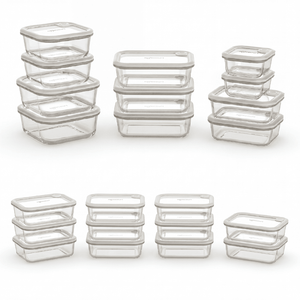
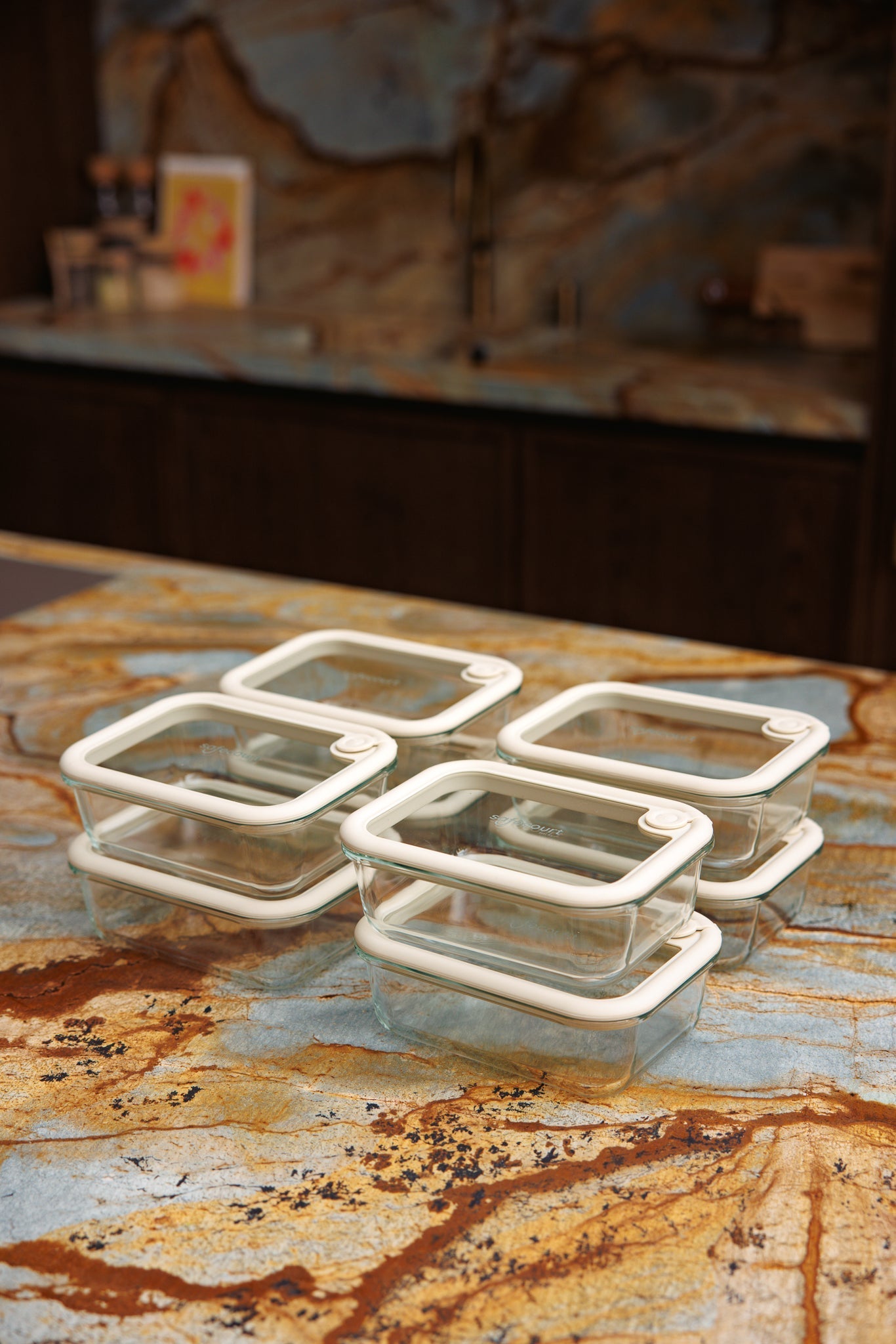
Luckily, there’s a simple solution: glass food storage. And no, it doesn’t have to be heavy, fragile, or expensive. We’ll show you how to make meal prep easy with glass — and why you’ll never go back.
Why plastic food storage is a problem
Plastic containers are convenient, cheap, and light. But they have a hidden downside: almost all plastic materials shed tiny particles when they come into contact with fat, acidic foods, or heat. Those particles — microplastics — end up in your food and eventually in your body.
Research from the University of Newcastle estimates that people ingest an average of five grams of microplastics every week. By comparison: that’s the weight of a credit card. And while the long-term effects are still being actively studied, more and more research points to links with hormonal disruption and inflammatory responses.
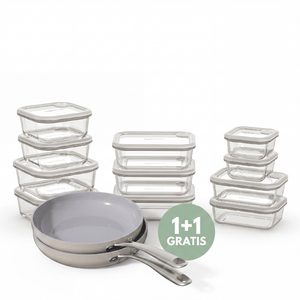
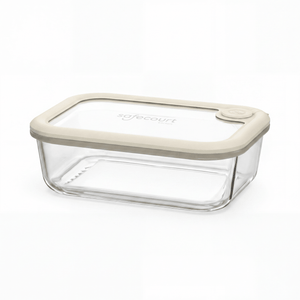
Glass: clean, safe, and more practical than you think
Glass is completely inert. It doesn’t react with food, doesn’t release any substances, and doesn’t absorb odors or flavors. That soup that smelled like curry last week? Gone after one wash. Plastic always keeps that memory.
Practical benefits:
- From freezer to oven to table in the same container
- Transparent — you can immediately see what’s inside
- Dishwasher-safe
- Stackable
- No yellowed edges or strange smells after a year
How to plan a week of meal prep with glass containers
Sunday, 1.5 hours:
Grains & legumes (3 large containers):
- Brown rice or quinoa for 4 days
- Chickpeas, roasted with paprika powder and garlic
- Lentils, cooked in broth
Vegetables (4 medium containers):
- Roasted sweet potato and bell pepper
- Raw cucumber, carrot, and cherry tomatoes
- Spinach and arugula (store dry, max 3 days)
- Broccoli and cauliflower, roasted
Proteins (2–3 containers):
- Pan-fried chicken breast or tofu
- Hard-boiled eggs
With these basics, you can put a complete meal on the table in five minutes every evening. No hassle, no decision fatigue.
How long can you store what in glass?
| Product | In the fridge | In the freezer |
|---|---|---|
| Cooked rice/quinoa | 4 days | 3 months |
| Roasted vegetables | 5 days | 2 months |
| Cooked meat/fish | 3 days | 2 months |
| Soup | 4 days | 3 months |
| Raw vegetables | 3–4 days | not recommended |
Tips for making them last
- Always let hot dishes cool before closing the lid — otherwise condensation
- Store sauces separately from your grains so everything doesn’t get soggy
- Label your containers with date and contents (a little sticker works wonders)
Glass food storage is a small investment that pays for itself. Not only for your health, but also for your wallet — one set lasts for years without discolored edges or broken closures.


Leave a comment
This site is protected by hCaptcha and the hCaptcha Privacy Policy and Terms of Service apply.