

When you cook for children, you think about healthy ingredients. But what about the pan, the sauce frother, the container their meal is in? Children are more sensitive to hormone-disrupting substances than adults — and the kitchen is one of the biggest sources of exposure.
Why children are extra vulnerable
A child’s body is still developing. Hormone balance, the immune system, the nervous system — everything is still being built. Substances that have little noticeable effect in adults can affect development in children even at low doses.
This applies in particular to:
- PFAS — Research shows that PFAS reduce vaccine response in children. Children who take in more PFAS build up fewer antibodies after vaccinations.
- BPA and phthalates — Hormone-disrupting substances that can mimic or block sex hormones. Early puberty in girls and behavioral problems in boys have been linked to higher exposure.
- Microplastics — Children eat and breathe in relatively more per kilogram of body weight than adults, which makes their exposure higher.
Baby milk: why the milk frother matters
For parents preparing baby milk with a milk frother: most frothers have a PTFE non-stick coating. At the temperature used to prepare baby milk (37–45°C), the chance of release is small, but with a damaged coating the risk increases.
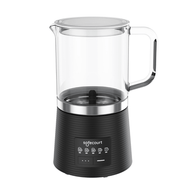
The Safecourt Onyx milk frother has a dedicated baby milk program that heats milk precisely to 45°C — the ideal temperature for baby milk — in a fully glass interior. No coating, no PFAS, no compromises.
Cutting boards: wood or plastic?
Plastic cutting boards are popular because they’re dishwasher-safe. But every cut scratches off tiny plastic particles that end up in your food. A study from the University of California (Davis) estimated that using an average plastic cutting board can result in up to 50 grams of microplastics being ingested per year.
Wood is naturally antibacterial thanks to tannins and has a self-cleaning effect because it absorbs moisture and traps bacteria. Wash a wooden cutting board with warm water and soap, dry it immediately, and treat it regularly with oil.
Practical tips for a child-safe kitchen
- Replace damaged non-stick pans immediately
- Use glass containers to store and reheat children’s meals
- Choose a glass or stainless-steel water bottle
- Choose a wooden or bamboo cutting board instead of plastic
- Never heat food in plastic containers, even if they say "microwave-safe"